

March 1922: making a home together
At seven o’clock on the evening of March 10, 1922, a group gathered at 202 First Street in Elizabeth. Their task was practical and ambitious: organize a Portuguese club and appoint people who could find a home, furniture, lighting, and everything needed to begin.
The meeting established three provisional governing bodies: the Direção, Conselho Fiscal, and Assembleia Geral. These officers would serve until a general election. Discussion continued until 10:30 that night, with another meeting proposed for March 26.
Alfredo Lima led the provisional Direção, supported by António Oliveira as vice-president, Alfredo Botelho and João Montes as secretaries, and Guilherme Enes as treasurer. Joaquim Conceição headed the provisional Conselho Fiscal, with Manuel Carvalho and José Lourenço as secretaries. João Pedro presided over the Assembleia Geral, alongside Alípio Lopes and Belarmino da Fonseca.
A name, a flag, and a shared identity
On March 18, 1922, at eight in the evening, members met again at 202 First Street to choose a name. Club Social Português won twelve votes; Club Fraternal Português received four, Club Filhos de Portugal three, and Portuguese American Club one.
Before the meeting ended, Belarmino da Fonseca spoke about Portugal and the initiative of the Portuguese residents who had brought the club into being. He offered a Portuguese flag. The next meeting was set for March 26 at two in the afternoon, at 163 First Street.
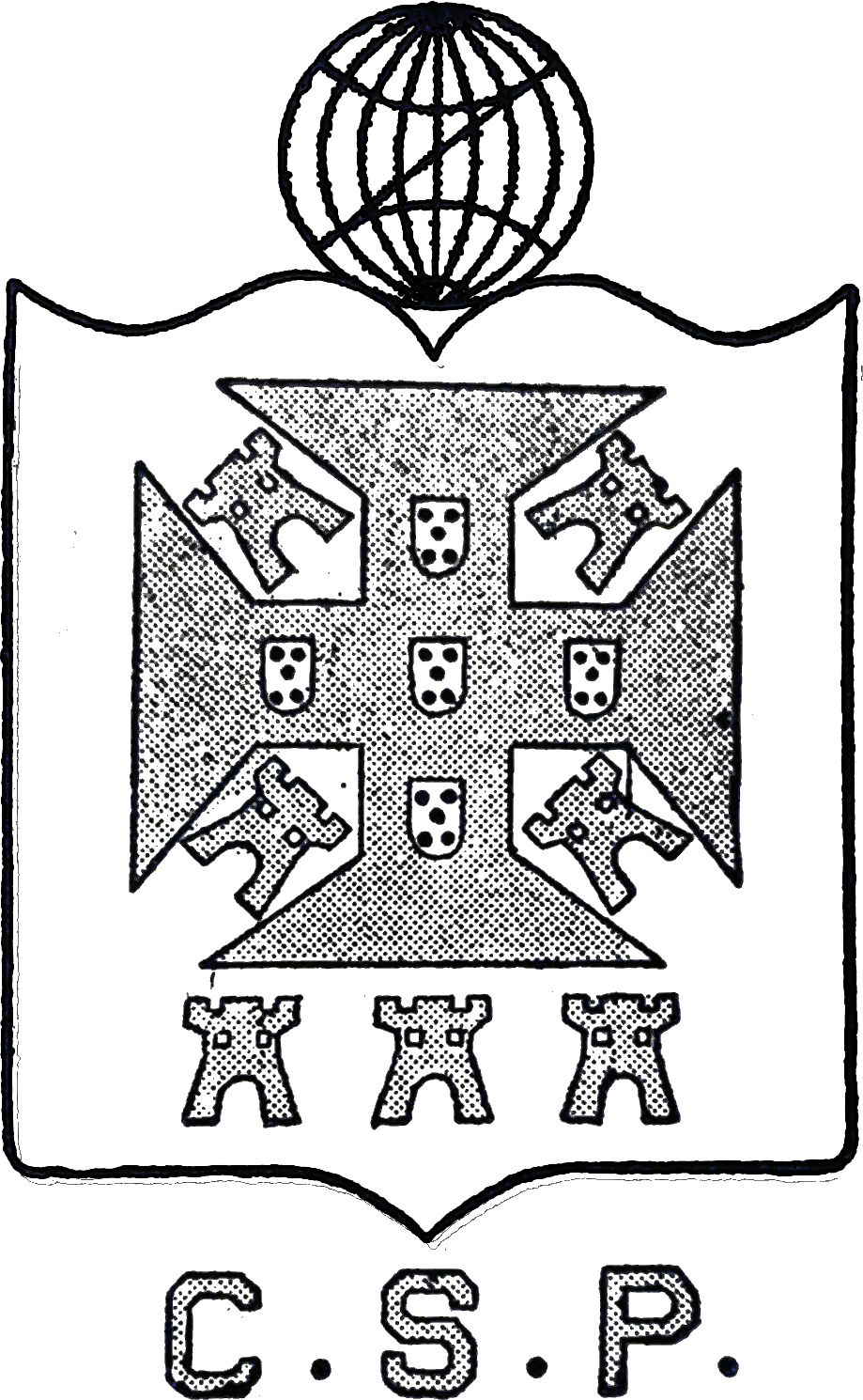
The early C.S.P. emblem carries that original name in its initials. Its shield, castles, and armillary sphere form a visual link to the club’s first years. March 18 remains the founding anniversary celebrated by PISC.
The governing bodies of 1922
The 1922 governing roster records the officers who followed the provisional arrangements. Guilherme A. Ennes served as president of the Direção, António Vaz da Costa as vice-president, Alfredo Botelho as treasurer, João Lourenço as secretary, and Amadeu Correia as second secretary. The vogais were José Pereira 1.º, José Pereira 2.º, José Cardoso, and David Lages.
João Pedro headed the Assembleia Geral, with Belarmino da Fonseca as first secretary and Alípio Lopes as second secretary. Candido Martins headed the Conselho Fiscal, alongside Manuel Carvalho and Joaquim da Conceição. Together, these records show how the club moved from its first organizing meeting to an established structure of shared responsibility.
Amadeu Correia: member number one
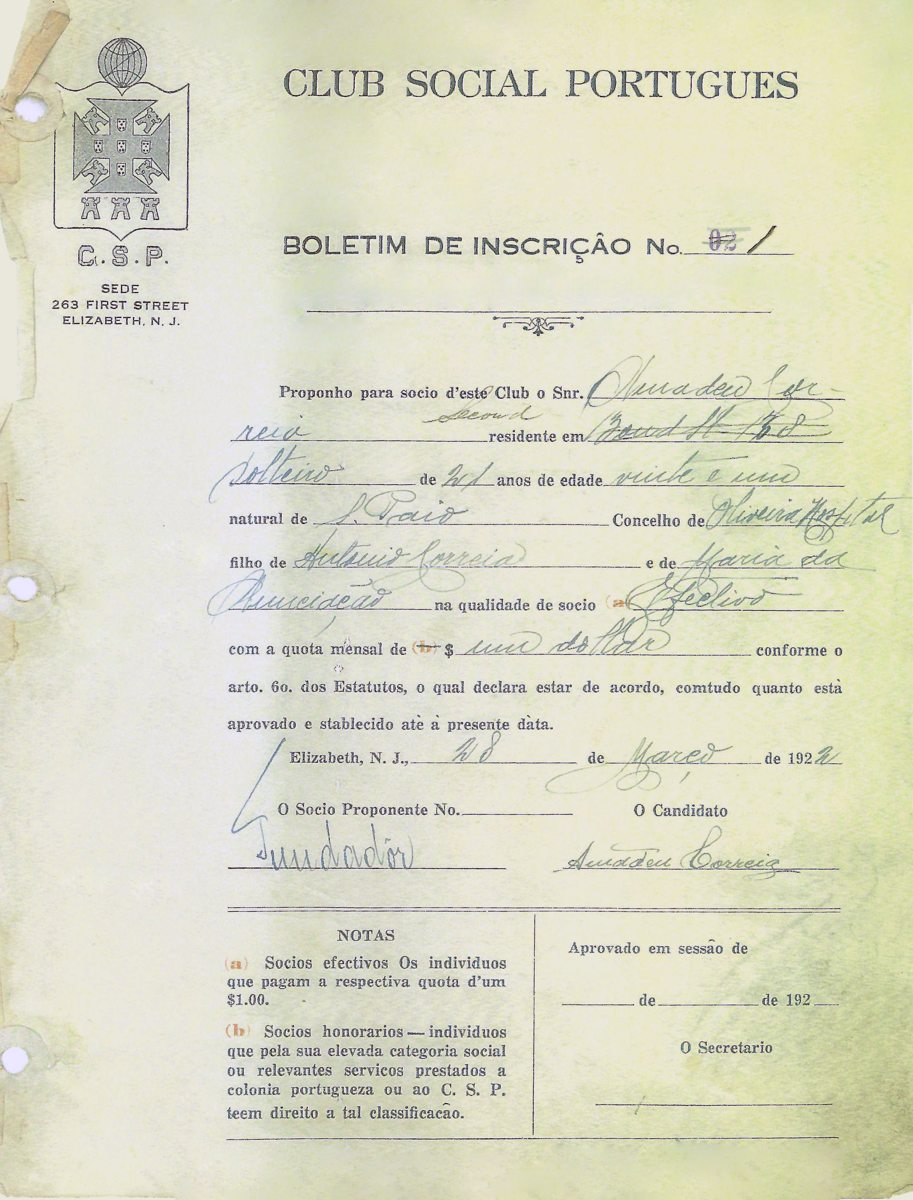
Amadeu Correia’s membership form, dated March 28, 1922, survives with his signature and the early Club Social Português emblem. He was member number one, a place that connects his name permanently to the beginnings of this community.
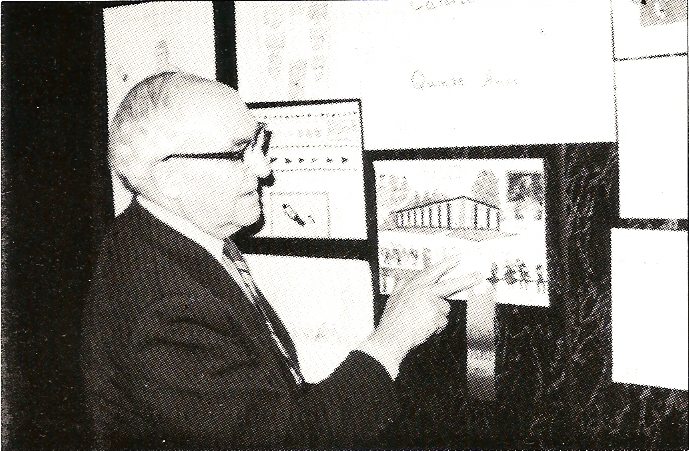
His commitment continued well beyond those first meetings. He helped establish the Portuguese school in 1935, and a later photograph shows him holding plans for the present clubhouse. His name is carried forward by Escola Amadeu Correia and the scholarship fund that supports its students.
The people behind the early years
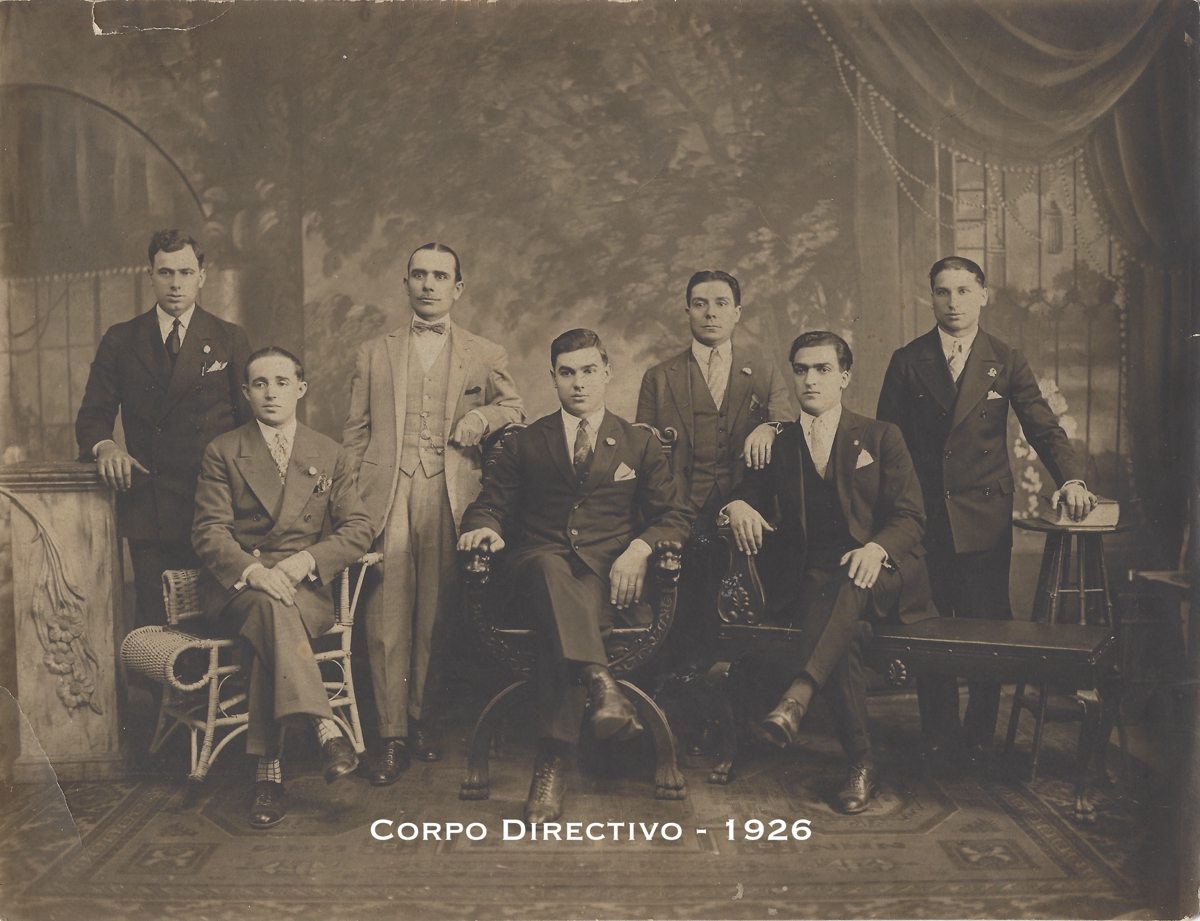
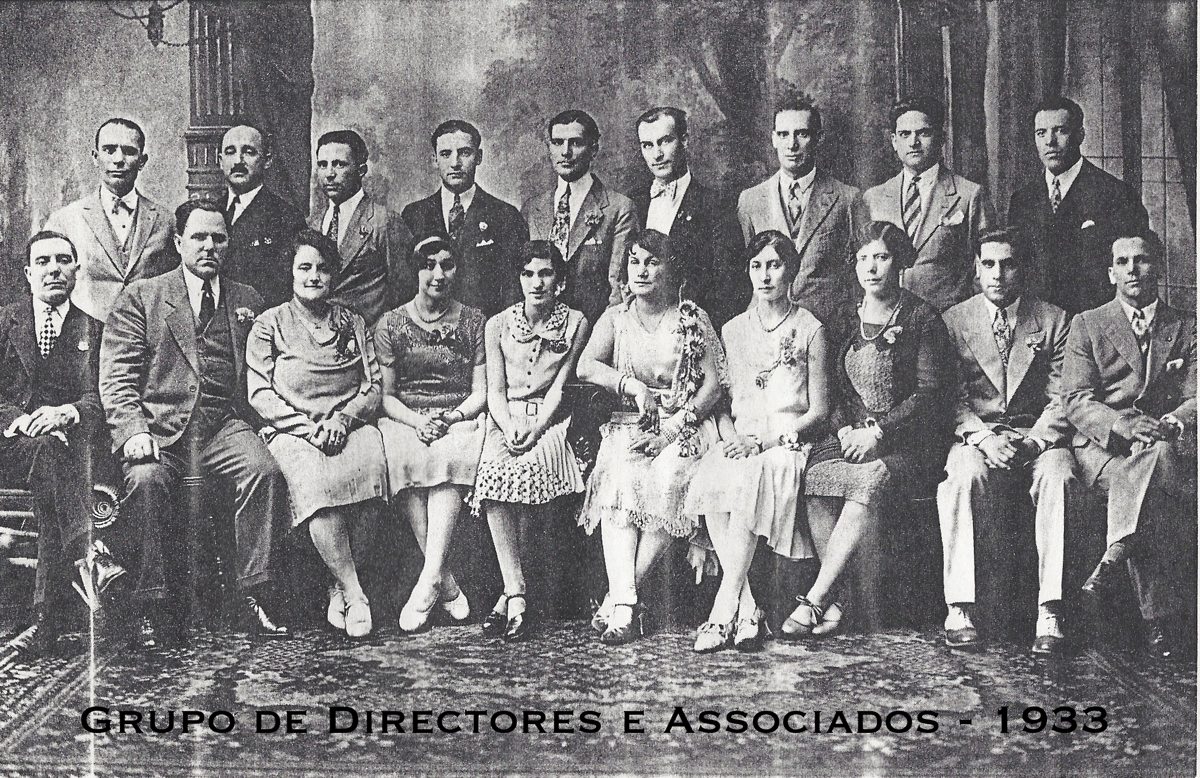
Photographs of the directors in 1926 and of directors and associates in 1933 show the community taking shape. These portraits preserve the people who kept the institution going after its founding meetings: members who accepted responsibilities, gathered their neighbors, and gave the club continuity.
The story is also one of families and friendships. Youth activities had roots in the earliest life of the organization, with young participants growing into adult members who would help lead its next chapters.
1935: service and education take root
The Damas Auxiliares held their first meeting on January 20, 1935. Initially known as the Senhoras Auxiliares do Club Social Português de Elizabeth, they organized to support the Direção across the club’s activities. Their work helped sustain cultural events and Portuguese traditions through successive generations.
On December 1 of the same year, the Portuguese school was founded. Education became a way to pass language and culture from parents to children. Families made that commitment after their working day, bringing children to learn the language of their ancestors.
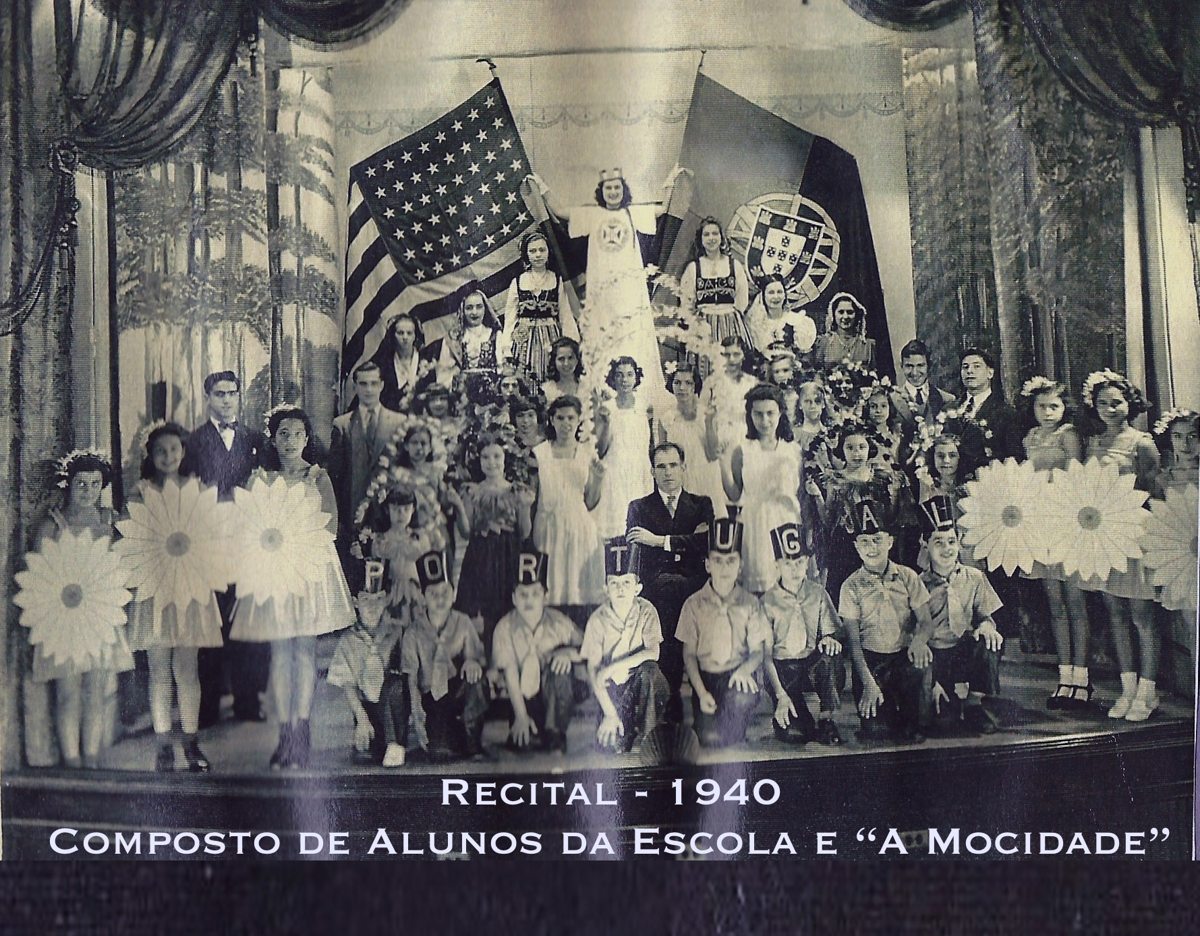
The school’s early photographs and its 1940 recital capture this commitment in practice. Learning Portuguese was part of a wider community life, with performance, celebration, and family participation alongside classroom study.
Sport, youth, and lifelong friendships
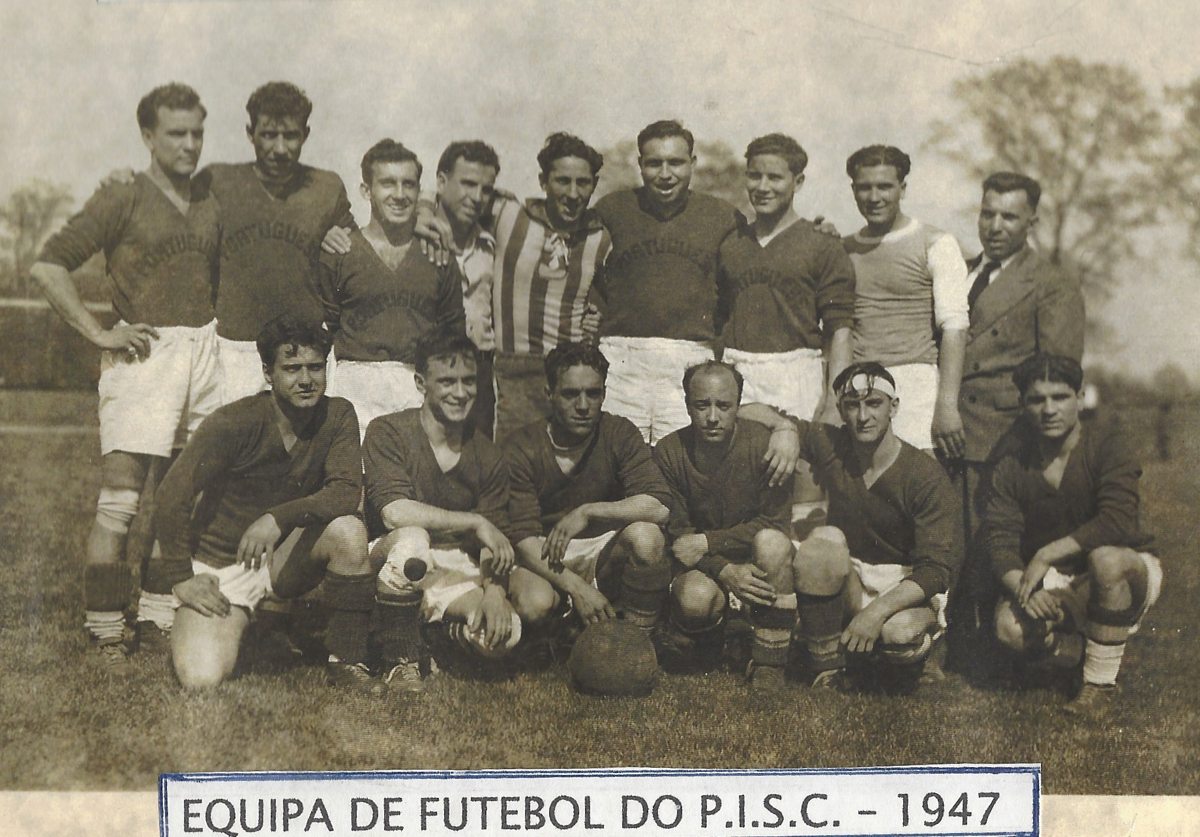
Football became an enduring part of social life among members, their children, and the wider community. A 1947 team photograph preserves one of the club’s early sporting chapters, long before the present youth program.
The youth group was first known simply as the Mocidade. As those young people grew older, some called themselves the Velha Mocidade. The names Nova Mocidade, Nova Geração, and Nova Juniors later reflected different ages and stages of life within the club.
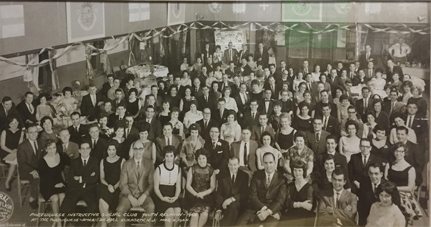
The Velha Mocidade reunion of 1965 illustrates the lasting friendships at the heart of that tradition. Activities for younger members continued to bring people together through celebrations, service, and shared projects.
The places we have called home
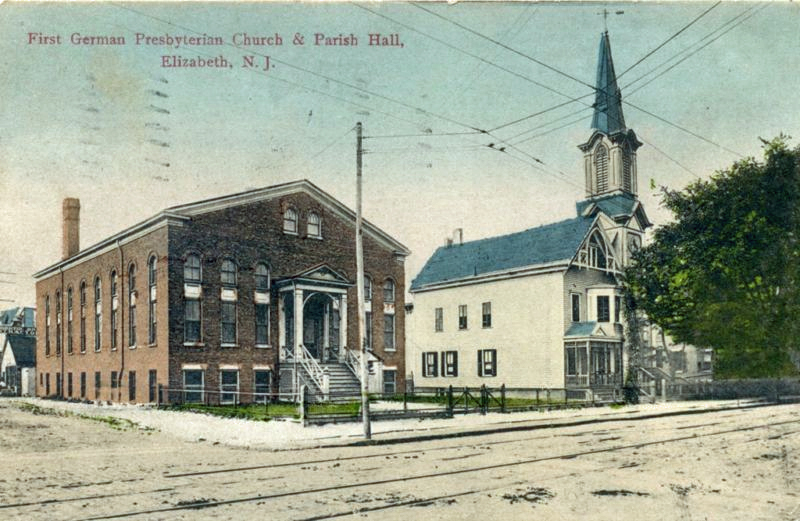
The founding minutes place the first meetings on First Street. Amadeu Correia’s early membership form carries the address 263 First Street. These records, together with photographs and the historic postcard above, preserve traces of the places that housed the club over time.
The postcard depicts the First German Presbyterian Church and Parish Hall in Elizabeth. One of the club’s former homes is part of this streetscape, connecting PISC’s history with an earlier chapter in the city’s life.
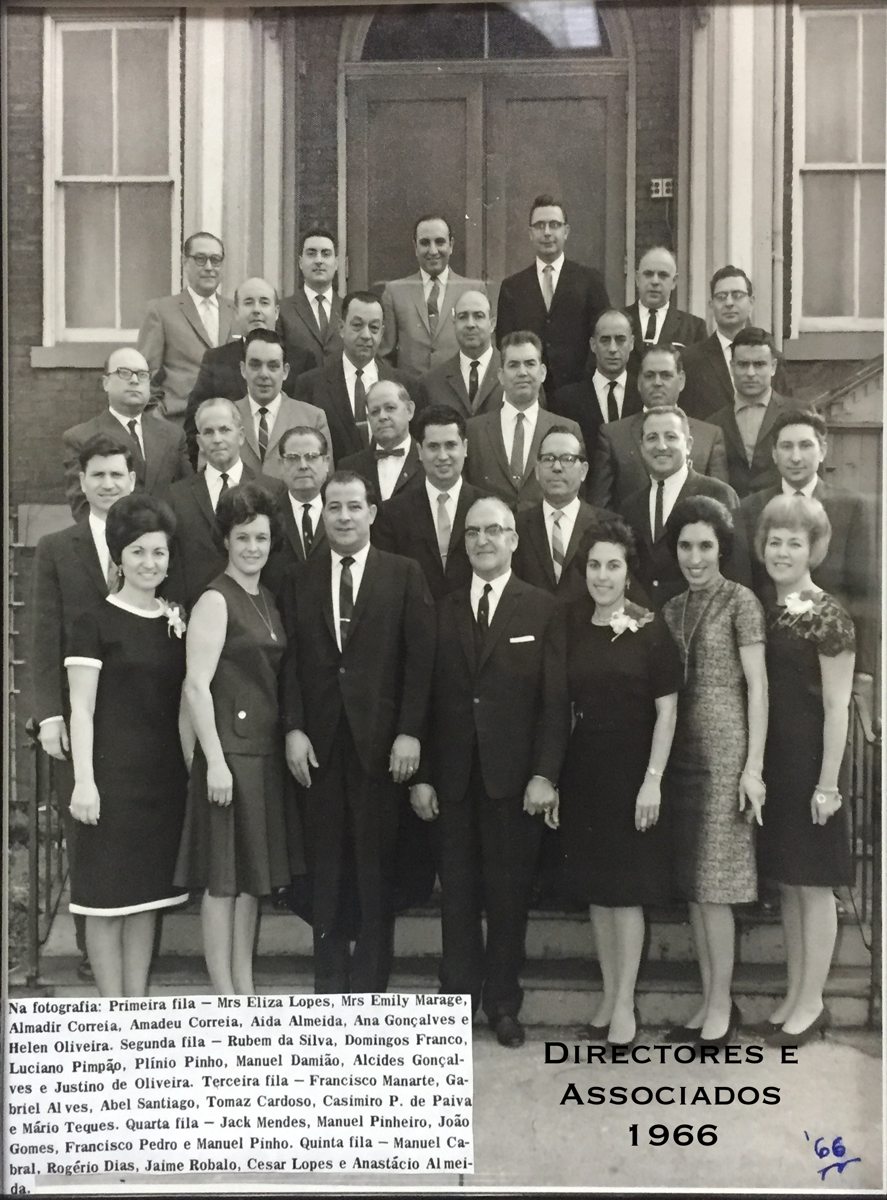
A 1966 photograph shows the governing bodies outside the former headquarters. Another image shows Amadeu Correia with plans for the present clubhouse. These photographs tell the story of a community building a lasting place to gather, celebrate, and pass its traditions forward.
1972: fifty years of continuity
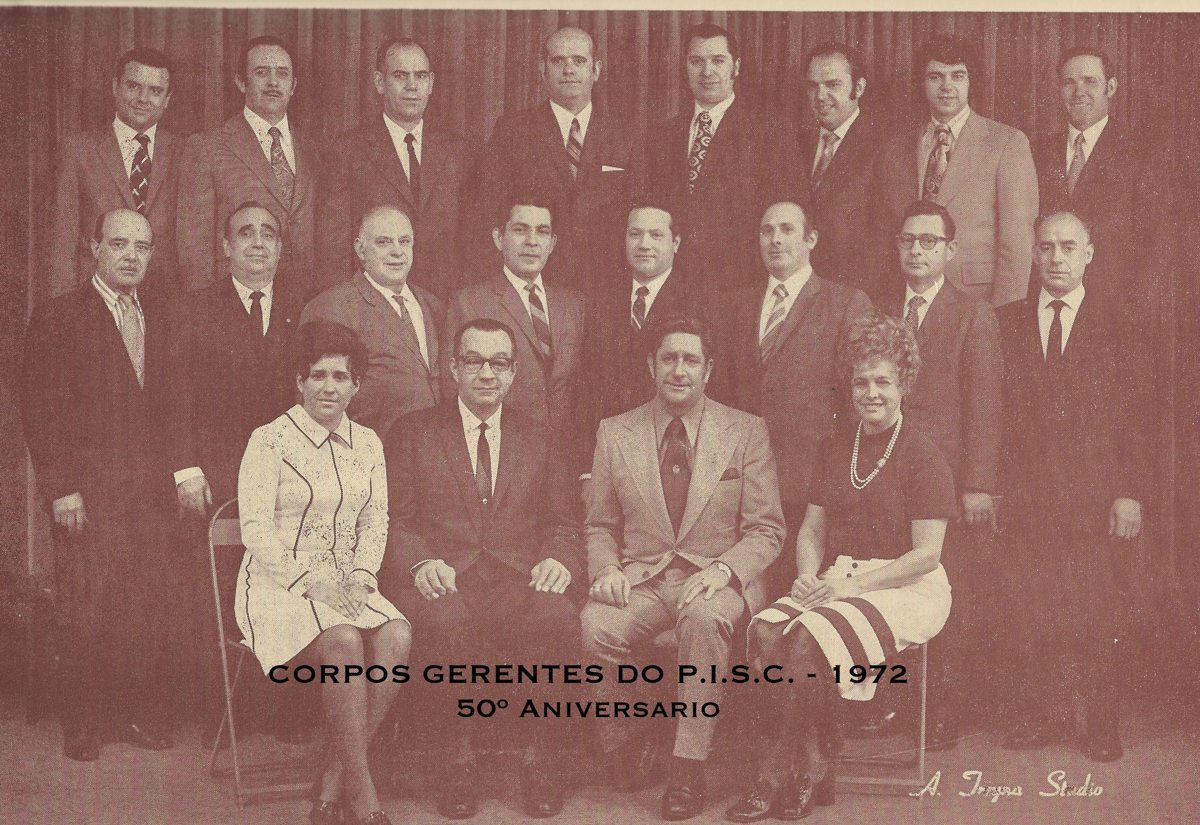
By 1972, the club had reached its fiftieth anniversary. The governing bodies photographed for that milestone stand within a line of service stretching back to 1922.
The record of past presidents preserves that continuity year by year. Alongside those who held office were the members, volunteers, teachers, families, and organizations whose work filled the club with life.
1978: the music and traditions of Minho
Rancho Danças e Cantares de Portugal was founded on March 18, 1978, by people from Minho living in the United States. César Loureiro Rodrigues was its founder, director, rehearsal leader, and concertina player.
From the beginning, the Rancho formed an integral part of PISC. Its adult and children’s groups preserved the costumes, songs, dances, and traditions of Minho while encouraging younger generations to value that heritage.
Family participation was central. Parents brought children to rehearsals, watched them learn, and often joined in by singing or playing instruments. The Rancho gave the club a way to share Portuguese folk culture both within Elizabeth and beyond it.
1994–2005: a shared future for youth soccer
The youth soccer program began in 1994 at Igreja Nossa Senhora de Fátima in Elizabeth. Jack Aresta founded it with the authorization of Monsenhor João Antão, starting with 49 players.
In 2005, as PISC began forming a youth soccer club, the community united its efforts into one program: Elizabeth Youth Soccer, I.N.S.F.–P.I.S.C. Competitive teams, recreational play, and volunteer commitment became parts of the same community project.
The program’s history includes championships and individual players continuing into college soccer and development programs. Its contribution reaches beyond match results, creating opportunities for young people to learn and belong.
2016: a new way to serve
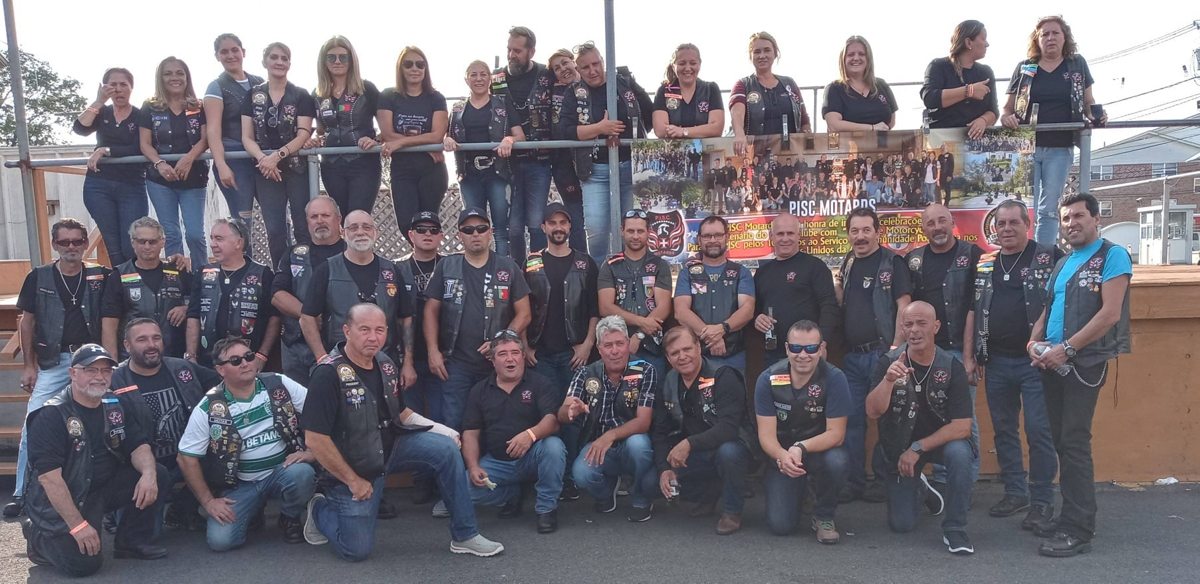
In 2016, Frank Gabriel proposed bringing together members who loved motorcycles and wanted to help the club and the community. The Assembleia Geral approved the Motards in June, and fundraising rides and support for other groups soon followed.
When the COVID-19 pandemic began, members used their contacts to obtain supplies for hospitals and frontline workers, including police officers, firefighters, and nurses in Elizabeth and neighboring communities.
On October 3, 2021, the Motards marked the approaching centennial with a 100-mile ride, bringing their shared enthusiasm into the celebration of PISC’s first century.
2021–2022: a century made visible
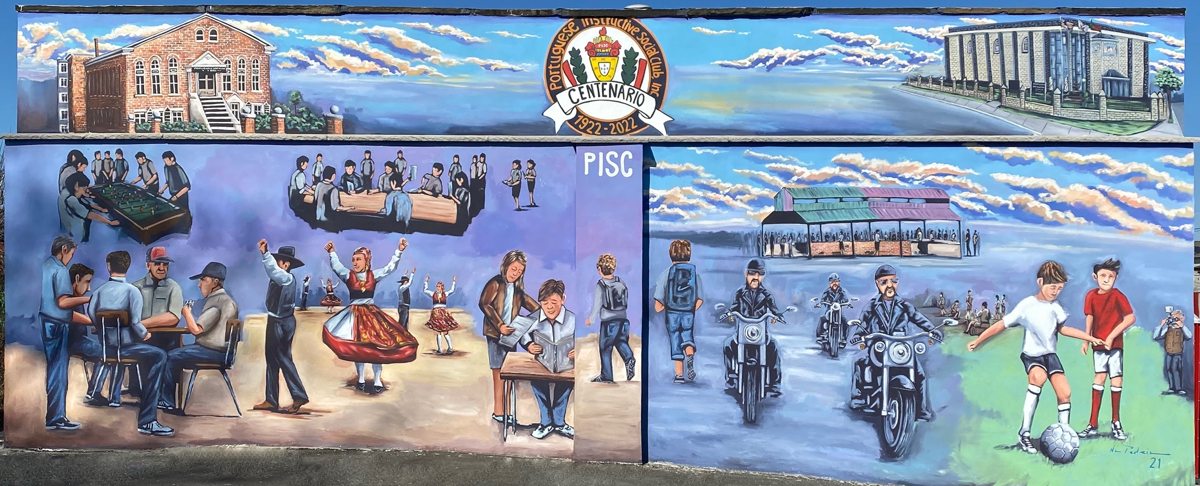
The centennial brought the club’s many stories together. Nuno Pedreiro completed a mural in December 2021 on the exterior of the school building, facing Routes 1 & 9. The project began with an Eagle Scout initiative from Troop 101 of Igreja Nossa Senhora de Fátima; scouts prepared the wall, and a Union County grant helped support the work.
The mural brings together the Rancho, school, Motards, sport, and scouting, as well as a tribute to Luso-Americano correspondent Joaquim Martins. Images of the first headquarters and present clubhouse connect the buildings to the people and activities that give them meaning.
For the 2022 celebration, the Damas Auxiliares helped prepare the details of the festivities. The club honored its founding members, former presidents, directors, and members who had died, recognizing a century built through many contributions.
The centennial membership roll begins with Amadeu Correia and continues across generations. It gives names to the shared history that lives on in the school, organizations, celebrations, and friendships of PISC.
The story continues
Fernando Albuquerque’s presidency continued through 2024. Maria Z. Carvalho became president in 2025 and continues in 2026, carrying the club into its second century.
Today’s chapters include Portuguese classes from preschool through ninth grade, support from the Amadeu Correia Scholarship Fund, the library and museum in the school building, and the PISC Vira Verde greenhouse project. The people and activities change, while the purpose of bringing the community together continues.
Milestones across a century
The founding account records the selection of temporary governing bodies at 202 First Street.
Members vote to name the organization Club Social Português.
The Damas Auxiliares hold their first meeting.
The Portuguese school is founded.
Rancho Danças e Cantares de Portugal is founded.
PISC celebrates its fiftieth anniversary.
The youth soccer histories of the parish and PISC come together.
The Assembleia Geral approves the Motards group.
Nuno Pedreiro completes the centennial mural.
The club celebrates its centennial.
Maria Z. Carvalho serves as president of PISC.